Business Intelligence Platform Guide

What is a business intelligence platform?
A business intelligence platform is software that collects, models, and visualises data so teams can answer questions and make decisions. It connects to source systems, applies governed data models, and presents trends through dashboards and reports. Microsoft Fabric and Power BI are leading examples, increasingly paired with machine learning for prediction.
If you are weighing up tools, comparing approaches, or planning a rollout, this guide explains how modern business intelligence software works, where machine learning genuinely adds value, and what a sensible implementation looks like. We keep the language plain and the claims honest, because that is how good decisions get made.
How does business intelligence software actually work?
Most business intelligence platforms follow the same shape, whatever the vendor. Data flows in from operational systems, gets shaped into a model the business recognises, and is then surfaced through reports people can trust. The difference between a good deployment and a frustrating one usually comes down to governance and ownership, not the tool itself.
The core layers
- Ingestion: connecting to databases, applications, files, and streaming sources.
- Modelling: turning raw tables into a semantic model with clear definitions, ownership, and lineage.
- Analysis: calculations, aggregations, and measures that reflect how the business thinks.
- Presentation: dashboards, reports, and natural language queries for decision makers.
- Governance: security, access control, cost attribution, and quality monitoring across the estate.
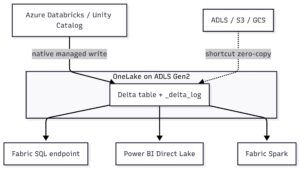
Within the Microsoft stack, Microsoft Fabric unifies these layers in one environment, with Power BI handling the presentation and modelling work most users interact with. For a broader view of the options on the market, see our overview of the best business intelligence platforms available.
What is the difference between business intelligence and machine learning?
This is the question we hear most often, and the answer is simpler than the marketing suggests. Business intelligence tells you what happened and why. Machine learning estimates what is likely to happen next. They are complementary, not competing.
Business intelligence vs machine learning at a glance
The table below sets out the practical distinction.
| Dimension | Business Intelligence | Machine Learning |
|---|---|---|
| Primary question | What happened and why | What is likely to happen |
| Output | Reports, dashboards, KPIs | Predictions, scores, classifications |
| Data orientation | Historical and current | Pattern-based and forward-looking |
| Audience | Executives, analysts, operations | Data scientists, embedded in apps |
| Typical example | Monthly revenue by region | Forecast of next quarter demand |
So when people ask about machine learning vs business intelligence, the honest framing is that you usually want both. The most effective deployments use business intelligence as the trusted foundation, then layer machine learning on top for forecasting, anomaly detection, and segmentation.
How do machine learning and business intelligence work together?
Business intelligence using machine learning is no longer a niche idea. When your data estate is already governed and modelled, machine learning becomes far easier to apply, because the inputs are clean and the lineage is clear. That is the practical reason governance comes first in any serious analytics programme.
Common patterns where machine learning in business intelligence pays off:
- Forecasting: demand, revenue, and cash flow projections inside existing dashboards.
- Anomaly detection: flagging unusual spend, fraud signals, or operational failures automatically.
- Segmentation: grouping customers or assets for targeted action.
- Natural language: Microsoft Copilot lets users ask questions in plain English and get governed answers.
Microsoft Foundry and Azure AI give you the tooling to build and host models, while Power BI surfaces the results where decisions are made. If you are exploring this stack, our look at Microsoft AI tools and where the innovation sits is a useful starting point.
What are the best Microsoft AI tools for business?
For organisations already invested in Microsoft, the answer is rarely a single product. It is a connected set of tools that share data and governance.
The core toolkit
- Microsoft Fabric: the unified data and analytics platform that brings ingestion, modelling, and reporting together.
- Power BI: the reporting and semantic modelling layer most business users live in.
- Microsoft Copilot: natural language queries across governance, cost, and performance.
- Azure AI: services for building, training, and deploying machine learning models.
- Microsoft Foundry: the environment for developing and operationalising AI applications.
Choosing between platforms is a real decision, not a formality. If you are comparing Microsoft Fabric against other ecosystems, our comparison of Microsoft Fabric and Databricks walks through the trade-offs. And before adopting any AI tooling, it is worth working through the critical questions to ask when adopting Microsoft AI solutions, particularly around governance and cost.
How do you implement Power BI in a business?
Implementing Power BI well is less about clicking through setup and more about getting the foundations right before you build. The pattern below reflects the governance-first approach we use across engagements.
A practical sequence
- Define outcomes first: decide what business question each report answers before building any pipeline.
- Set governance standards: agree security, naming, and ownership before deploying dashboards.
- Build the semantic model: create governed measures with clear lineage, not ad hoc spreadsheets.
- Deploy to a controlled environment: manage access, capacity, and cost from the start.
- Measure adoption and ROI: treat the deployment like a product, with usage and value tracked over time.
This is the heart of the Onyx Impact Framework: outcomes before pipelines, governance before dashboards. It is also why many Power BI rollouts stall. Without ownership and a cost model, sprawl sets in and trust in the numbers erodes. A governance platform built for Microsoft Fabric helps keep that under control, scoring maturity across dimensions like cost efficiency, data quality, and security, and identifying spend reductions of up to 30 percent.
When should you hire a business intelligence consultant?
A business intelligence consultant earns their place when the cost of getting it wrong is high, or when internal teams are stretched. Typical triggers include a stalled Power BI estate, rising Fabric costs with no clear attribution, a governance gap ahead of an audit, or a forecasting need that internal teams have not had time to tackle.
The right consultant should accelerate your team rather than replace it. Good engagements leave behind documented standards, an upskilled team, and a roadmap you can run yourself. You can learn more about how we work on the Onyx Data homepage.
Buyer FAQ
How much does a business intelligence platform deployment cost?
It depends on scope, but the entry points are clear. Strategy and enablement engagements range from GBP 5,000 to GBP 15,000. A fixed-scope Fabric Accelerator that delivers one governed, production use case in four weeks starts from GBP 25,000. Platform licensing for governance tooling is tiered by workspace count, with a 30-day free trial via Azure Marketplace and no setup fees.
How long does implementation take?
A focused first use case can reach production in around four to six weeks when scope is fixed and governance is agreed up front. In one Microsoft-published deployment, a client moved from concept to production in six weeks. Larger estate-wide rollouts run longer, but a sensible approach delivers value early rather than waiting for a big-bang launch.
How do you handle governance and cost control?
Governance is built in from Day 1, not added later. That means defined ownership, lineage, access control, and cost attribution before dashboards go live. A FabOps governance baseline scores maturity across eight dimensions, surfaces savings opportunities, and provides audit-ready reporting, so finance and risk teams have visibility throughout.
Should we build this in-house or buy a platform?
For most organisations the honest answer is both. Build the parts that are specific to your business, and buy the governance, monitoring, and optimisation layers that are not worth reinventing. A platform that is native to Microsoft Fabric saves your team from building cost attribution and governance scoring from scratch, while leaving your data and models firmly in your control.
Will it actually reach production, or stall as a pilot?
Pilots stall when there is no owner, no governance, and no adoption measurement. Our engagements are scoped around a single production use case with a named owner and a 90-day scale-out roadmap, precisely so the work crosses the line into daily use rather than sitting in a proof of concept folder.
Talk to a certified team
Onyx Data is a Microsoft-aligned consultancy specialising in governed Microsoft Fabric, Copilot, and Azure AI deployments, with a practice of 60 plus Microsoft-certified consultants. Across seven enterprise engagements we have supported GBP 93M in client impact, as stated by our clients.
If you want a clear view of which business intelligence platform fits your estate, where machine learning will add value, and how to reach production without losing control of cost, we are happy to help.
Book a 30-minute strategy call and we will walk through your goals, your current data estate, and a practical path forward.
Related Articles