From Spreadsheets to “RiskGPT”: How One Bank Turned Fabric and AI into a Real-Time Risk Nerve Center

Most banks don’t wake up one morning and decide, “Let’s rebuild risk management.” It usually starts with something quieter and more uncomfortable: a feeling that the way you’re working just isn’t sustainable anymore.
That was the reality for Kuwait Finance House (KFH), a leading Islamic bank operating across 12 countries. Their risk teams were smart, experienced, and committed. But they were also stuck in a way of working that will sound painfully familiar to a lot of financial institutions: manually stitching together spreadsheets, chasing numbers from different systems, and waiting days or weeks for a view of risk that was already out of date by the time it reached the board.
This is the story of how they changed that—by unifying their data on Microsoft Fabric, building an AI engine called “RiskGPT”, and quietly transforming risk from a gatekeeper function into a growth partner.
When risk runs on spreadsheets, everyone feels it
As KFH grew and acquired another bank, the complexity of its risk landscape exploded. Each subsidiary had its own systems, its own way of reporting, and its own data quirks. On paper, the group was bigger and stronger. Inside the risk function, it felt like trying to hold twelve different puzzles together at once.
Risk analysts spent days manually compiling data in spreadsheets. Every month, they wrestled with questions like:
-
“Which version of this number is correct?”
-
“Did we get the latest file from that subsidiary?”
-
“Why don’t these totals reconcile?”
This wasn’t just inconvenient. It had real business consequences. Evaluating credit cases could take three to five days. Aggregated risk reports took weeks to prepare, reconcile, and sanity‑check. By the time everything was ready for leadership, the underlying exposure had often shifted.
When your core risk processes run at that speed, you’re not really managing risk—you’re documenting it after the fact.
The turning point: risk can’t be a bottleneck anymore
The acquisition was a forcing function. More customers, more products, more jurisdictions. More expectations from regulators and the board.
KFH reached a simple but uncomfortable conclusion: the way they were working would not scale. If they tried to keep up with growth using the same manual processes, risk would become a permanent bottleneck. At best, that meant delayed decisions. At worst, blind spots.
Under the board’s direction, KFH decided to treat risk transformation as a strategic initiative, not just a tooling upgrade. They weren’t looking for a prettier dashboard. They were looking for a way to:
-
Trust the data, because it all flowed through a consistent pipeline.
-
See risk across all 12 countries, not in disconnected slices.
-
Move from “What happened?” to “What’s likely to happen next?”
That meant two big moves: unifying data on Fabric and building an AI‑powered risk engine that still respected the bank’s own policies.
Step one: centralising risk data on Fabric
The first step was to stop treating each subsidiary’s risk data as an island.
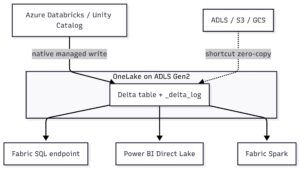
With Microsoft as a long‑time partner, KFH consolidated data from all its subsidiaries into a central data centre powered by Microsoft services. Fabric became the backbone: processing large volumes of raw data, organising it, and moving it into a governed data warehouse layer.
The goal wasn’t just centralisation for its own sake. It was to create a single, trusted foundation that AI could sit on top of. If your data is inconsistent, AI just gives you inconsistent answers faster.
With Fabric in place, KFH had:
-
A consistent way of ingesting and structuring risk data from across the group.
-
A single platform to run models and analytics at scale.
-
A foundation for real‑time reporting into tools like Power BI.
That set the stage for the second move: RiskGPT.
Step two: building “RiskGPT” on top of Fabric data
Once the data estate was unified, KFH’s risk team and a research institute partner built an in‑house AI engine they call RiskGPT.
The idea wasn’t to outsource judgment to a black box. It was the opposite: encode KFH’s own business rules, policies, and risk appetite into an engine that could:
-
Automatically run complex risk models (early warning systems, RAROC, etc.).
-
Combine historical patterns with current exposures.
-
Surface insights in language risk professionals and relationship managers could actually use.
KFH connected RiskGPT to Microsoft 365 Copilot and Power BI Copilot so teams could query risk data and scenarios in more natural ways. Instead of spending hours pulling numbers together, analysts could ask targeted questions and spend time interpreting the answers.
Crucially, the AI was guided by KFH’s rules, not the other way around. Risk management executives stayed in control of how models were configured and what thresholds were acceptable. AI became an amplifier for their expertise, not a replacement for it.
What changed: from days to minutes, and from gatekeepers to partners
The impact on day‑to‑day work was dramatic.
Evaluating credit cases, which used to take three to five days on average, can now be done in under an hour using RiskGPT’s dynamic risk rating. That means customers don’t wait nearly as long for decisions, and the bank doesn’t tie up internal capacity in back‑and‑forth emails and manual analysis.
Reporting timelines collapsed too. Where it once took two weeks to compile and reconcile aggregated risk data, now KFH uploads data to the central environment and sees it almost instantly in Power BI via Fabric. Risk leaders can shift their time from “pulling numbers together” to “working with the board and CEOs to interpret what’s changing and what to do about it.”
Internally, something else changed as well:
-
Teams stopped chasing each other for data, because the process became automated.
-
Stress levels dropped, because people trusted that the latest numbers were already in the system.
-
Collaboration improved, because conversations moved from “Where is the data?” to “What does this tell us and how should we respond?”
At the customer level, relationship managers can now use RiskGPT to show clients where their risk profile is strong or weak, and what they could do to improve it. That turns risk conversations from “yes/no” decisions into advisory moments that build trust.
Risk as a growth function, not just a brake
Maybe the most interesting shift isn’t about speed at all. It’s about identity.
Traditionally, risk is seen as a brake pedal: essential for safety, but something you press when you want things to slow down. With the new Fabric‑ and AI‑driven setup, KFH’s risk team is increasingly acting like a set of instruments in the cockpit—showing where the bank can safely accelerate.
Because they now have a clearer, more current view of risk across sectors and segments, the team can:
-
Spot industries or sub‑segments that are performing well within the bank’s risk tolerance.
-
Recommend where to grow, not just where to pull back.
-
Forecast a customer’s future risk profile, including likely financials and cash flow, not just look in the rear‑view mirror.
That dual view—historical and forward‑looking—helps KFH optimise risk and ultimately drive profit, not just avoid loss.
It’s a subtle but powerful shift: from being seen as gatekeepers to being recognised as value creators.
Why this story matters for other banks and risk leaders
It’s easy to dismiss stories like this as “nice case studies” that belong to organisations with unusual budgets or unique circumstances. The reality is that KFH’s starting point—manual spreadsheets, long reporting cycles, fragmented data—is extremely common.
What’s different is the way they approached the solution:
-
They didn’t treat Fabric as just another tool. They used it as the backbone to unify and govern risk data across the group.
-
They didn’t bolt on AI as a novelty. They built RiskGPT around their own business rules and used Copilot tools to make it accessible to real users.
-
They didn’t stop at efficiency. They deliberately pushed risk into a more strategic role, closer to growth decisions and customer conversations.
If you lead risk, data, or transformation in a financial institution, the lesson isn’t “copy this architecture exactly.” It’s simpler: use your next platform upgrade—whether that’s Fabric or something else—as an opportunity to rethink how risk actually operates.
Do you want a slightly faster version of the old process?
Or do you want a risk function that can sit beside the business and say, “Here’s where we can safely move faster”?
Kuwait Finance House chose the latter. Fabric and AI were the enablers. The real transformation was the choice to turn risk into a real‑time nerve center for the bank, rather than a back‑office report factory.
And that’s a story a lot of banks could write their own version of, if they’re willing to start.
Stories like KFH’s are encouraging, but they also surface important questions: “Could we do this here?” “What would it take?” “Where are our biggest risks if we try?”
Onyx Data works with data, risk, and finance leaders to answer those questions in the context of their own organisations—mapping current risk and data flows, designing Fabric‑ready architectures, and building the governance and observability that keep regulators comfortable while the business speeds up.
If you’d like to explore what that might look like for you, complete the form below. Share your role, your current platform landscape, and the one risk or insight challenge that keeps resurfacing. From there, Onyx will suggest a tailored, no‑obligation starting point you can take back to your team.
Related Articles