OneLake Is Not Your Biggest Risk. Silence Is.

OneLake’s Promise vs. a CISO’s Reality
For CISOs and DPOs in healthcare and finance, the promise of “one copy of the truth” can sound uncomfortably like “one blast radius.” Microsoft Fabric’s OneLake centralises data so analysts and developers can move faster, but it also concentrates risk: a single misconfigured workspace, an over-privileged role, or an exposed lakehouse can push regulated PII from “contained” to “everywhere” in one move. The real question is no longer how fast the platform is, but how fast sensitive data can leak if something goes wrong.
Modern lakehouse platforms, including Fabric, ship with increasingly granular security and governance controls: role-based access, table- and column-level permissions, unified catalogs, sensitivity labels, and central auditing. On paper, that should reassure any security leader. In practice, however, the day‑to‑day risk comes from configuration drift—what happens as more workspaces, shortcuts, and lakehouses are created by different teams under time pressure.
How Fabric’s Convenience Becomes a Compliance Risk
Fabric’s power is that it makes data access easy: self‑service workspaces, built‑in BI, and simple ways to connect to OneLake from multiple engines. That same ease is what keeps CISOs awake. A “Reader” role meant for curated reports might retain a path to underlying parquet files; a dev or test workspace might quietly accumulate real patient or financial data and remain open to a broad Active Directory group. None of this requires malice—only defaults that nobody revisits.
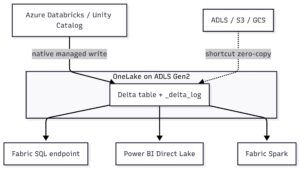
For healthcare and finance, these patterns map directly to regulatory exposure. GDPR and HIPAA both expect you to know who can see what PII/PHI, prove that only the right people have access, and demonstrate that you can detect and remediate inappropriate access promptly. In a unified lake like OneLake, where the same data can be queried from SQL, Spark, and BI tools, regulators will not accept “the BI front end was locked down” if raw data was still reachable from somewhere else.
Why Traditional Controls Break in a Lakehouse World
Traditional governance models assume a small number of centralised systems, infrequent changes, and long review cycles. That assumption breaks in a Fabric or lakehouse world, where new workspaces and datasets can appear daily and access patterns cross organisational boundaries. You can write excellent policy documents and build robust role designs, but manual reviews and annual audits cannot keep pace with continuous change.
Security and governance teams are also dealing with opacity. As more data products and AI models appear, it becomes harder to answer simple questions like “Where exactly does PII live today?” and “Which workspaces expose it to more people than intended?”. Without near real‑time visibility into permissions and data classification, leadership is forced to rely on assurances rather than evidence—an uncomfortable position when board members and regulators start asking detailed questions.
What “Good” Looks Like for PII in OneLake
In a OneLake context, “good” security is not just about tight defaults; it is about continuous, automated assurance. That typically means three capabilities working together:
-
Automated discovery and classification of PII/PHI across raw files, tables, and derived datasets, so you always know where sensitive data actually is.
-
Ongoing evaluation of workspace, item, and role permissions against intended policy, with alerts when anything deviates—such as a workspace going “Public” or a role gaining access to raw PII that should be masked.
-
Centralised, immutable logging and reporting that allows you to reconstruct who had access to what, when, and to show auditors an end‑to‑end story of exposure and remediation.
Done well, this shifts OneLake from “scary central point of failure” to “single place where security and compliance can be enforced and observed.” The unification becomes an advantage: one catalog to scan, one permission model to check, one audit trail to present.
From Governance Slideware to Continuous FabOps
The emerging pattern in regulated organisations is to treat Fabric and the lakehouse as living systems that need operational discipline, not just design documents. Under labels like “FabOps” or “DataSecOps,” teams are building continuous loops around their Fabric tenants: scan, classify, compare, alert, remediate, and report. This complements, rather than replaces, the built‑in controls from Microsoft.
For CISOs, DPOs, and Heads of Data Governance in healthcare and finance, the goal is not to slow Fabric down or block self‑service analytics. It is to make “secure by default” a real, measurable property of the environment, even as new workspaces and data products appear every week. Only when you have that continuous lens can you say to your board and your regulator, “We do not just trust our configuration; we test it, all the time.”
If your Microsoft Fabric or lakehouse footprint is expanding faster than your ability to manually review workspaces, permissions, and PII locations, now is the time to validate your assumptions. Use the form below to request a confidential consultation focused on your Fabric tenant: together we can map your current exposure surface, identify where permission drift and PII risk are most likely to occur, and design a pragmatic FabOps approach that lets your teams move quickly without ever compromising on your core principle—no leaks.
Related Articles